Showing posts with label Behavior. Show all posts

8/22/2012

Good Hang Outs!


In a well set-up crabitat, it is important to have many things:  a freshwater pool, a saltwater pool, moist & deep substrate, extra shells, and plenty of places to climb and hide.  While the former are all things that are vital to your crabs survival, good hang outs where your crabs are able to be instinctively crabby make the crabitat fun for both you and your crabs.

Let's face it.  Sometimes, keeping land hermit crabs lacks the action that having other pets does.  They don't really do much and unlike animals like dogs or cats, they don't really prefer to play or interact with human beings.

In order to make a crabitat fun, it's important to provide your crabs with a form of exercise that is stimulating to their natural instincts.  In the wild, land hermit crabs are often referred to as "tree crabs" because they prefer to climb up in trees and other places during the day.

By installing plenty of places for your crabs to climb, you're ensuring that they're able to act out their instincts and get a good form of exercise.  It is also fun and exciting to watch them climb and hang out.  I love to sit and watch my crabs climb around in the crabitat!

There are many awesome ideas that you can use to put a little more climbing space in your tank!  Corner shower caddies (with suction cups) offer a great second level that takes up minimal space.  You can put moist moss, extra shells, or a hidey place inside.  Driftwood, cork bark, grapevine, or cholla are great pieces that are perfect for hermit crabs to climb on while adding a natural look to your crabitat.  Many online stores offer hemp nets and ropes.  Fake vines and plants sold at pet stores are another great alternative.  Finally, many aquarium pieces double as a hiding spot and a place to climb!

When it comes to decorating a crabitat, the options are unlimited!  With a bit of creativity, your crabitat can be transformed into a place that is healthy and fun for your land hermit crabs.  Finding that perfect hang out spot for your crabs might be a bit difficult, but with time and a bit of patience, you'll soon manage to craft a tank that keeps you and your crabs busy and enthralled!

8/18/2012

Building Trust


Tonight I was fascinated by the amount of trust some of my hermit crabs have learned to place in me.  Now whether or not this can be truly called "trust" is a matter of debate, but we can certainly affirm that some land hermit crabs learn that the crab caretaker is not a threat to their safety.

It was very late and the fluorescent lights were switched off and I was watching the crabs with my room light turned on.  The crabitat was still rather dark, but the Violas that were out and about were able to see me.  Shinto, one of my Purple Pinchers, was also able to see me.

Shinto is very trusting of me.  He often comes out when I am taking pictures and he seems to enjoy watching me from inside the tank.  When I place my hand in the crabitat, he no longer cowers away or hides in his shell.  He simply sits there and goes about his business.


The Violas used to be very skittish around me, but now they are starting to warm up!  One of my Violas, Manhattan, was watching me as I was watching her.  I decided to put my hand in and drop a few pieces of organic oat cereal into the crabitat.  After I dropped the pieces in, she went running right to the cereal and started munching!

Trust can take some time to build with hermit crabs and it often happens after many months or even years.  Some crabs may never be too keen on trusting the human hand, but others seem very ready to learn that we do not pose a threat.  It's nice for them to be able to expect food when I'm around!

9/13/2011

The Tale of the Grasshopper

Disclaimer: If you do not like feeding live foods or have issues with killing insects, please do not read this story!

Today, while outside in my yard, I found a grasshopper hopping about. I decided to capture him and feed him to the hermit crabs due to some members of the HCA feeding different live insects and having good results.

I have an entire jar of freeze-dried grasshoppers. Unfortunately, my hermit crabs don't always go crazy for these. They may nibble at a leg here or there, but they never devour them... like they did tonight with the live grasshopper I put in!

To subdue the grasshopper, I captured him in a jar and froze him for ten minutes or so. This slows down his metabolize severely, but doesn't kill him. After he's been out of the freezer for a little, I put him into the crabitat, and he slowly started regaining his mobility. He didn't even have time to start walking before the crabs started munching.

The grasshopper was completely torn apart! There are legs everywhere, the body is severed in half... these hermies really went to town on this bug! That said, my hermies really seemed to enjoy Mr. Grasshopper!

7/11/2010

Personalities of Land Hermit Crabs

Although believed to be "throwaway pets", animals that live for a month, or "living" souvenirs from a vacation, land hermit crabs are truly exotic and fascinating creatures when placed in a proper habitat. Crabs have many different personalities, and a crabber can get to know their crabs by observing them throughout the day.

Some land hermit crabs are very shy and will only come out at night when no one is watching. Some land hermit crabs are active and are constantly out. Some land hermit crabs are bold and do not mind the presence of humans.

I have had crabs of numerous personalities, all of which are a little different. I have had crabs who are willing to eat from my hand, and I have had crabs who will never come out of their shell when approached.

Discovering your land hermit crabs' personalities is just a part of the experience! Ecuadorian land hermit crabs are known for their antics and big personalities, making them a personal favorite amongst crabbers of the hermit crab community. Out of the three Es I recently purchased, each has their own personality.

Alejandro is very active and loves climbing over everything. He also isn't extremely shy. Lucio is a much more shy crab and prefers to hide during the day. If my hand or face approaches the tank, Lucio is quick to dart in the opposite direction. Santino isn't extremely shy, but he is a little bit. He has a lot of personality for such a small crab: he managed to bring up an almond slice all the way to the top of one of my highest decorations!
Land hermit crabs are much more than what most people regard them as. They can be true characters and a lifelong companion, when properly cared for. This is the part of land hermit crabs that make them so much fun!

7/09/2010

Shells

The shell of a land hermit crab is vital to survival. Land hermit crabs do not make their own shells, however. Nature designed them with a certain flaw: they have a soft abdomen. To support and protect this soft abdomen, the crab must find a way to protect it. The seashell is a perfect match.

Seashells are hard and offer protection from moisture loss, heat, and predators. Land hermit crabs and seashells co-evolved to form a perfect team. The shells, of course, are produced naturally by snails: either land or sea. Once the snail dies, the shell becomes vacant and a land hermit crab can move in. This is the perfect way to recycle the shell!

Different species of land hermit crabs like different types of shells. There are numerous species of shells. Some popular types are babylon, turbos, and nerites. Of course, these aren't the only type of shells for land hermit crabs. There are many different types!


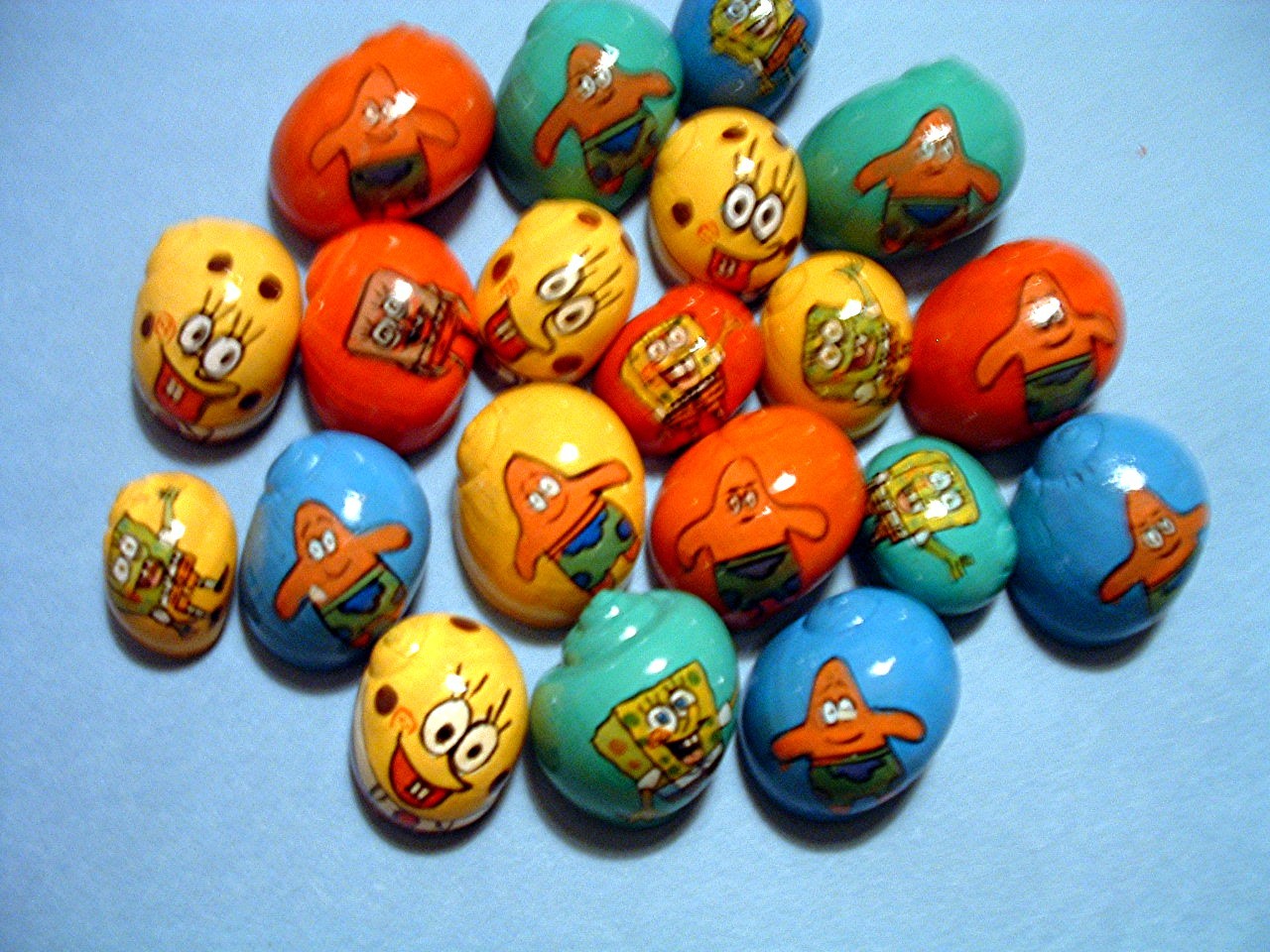
Natural shells are what is advocated here by me, but some people offer painted shells. I do not believe painted shells are a good choice because some paint may be toxic, and there are horrible stories of how manufacturers force land hermit crabs out of natural shells and into painted shells. Some crabs are even permanently glued to their shells!

From the seller's point of view, a crab in a Spongebob shell will sell better than a crab in a beat-up magpie shell. Since hermit crabs are marketed towards children, the Spongebob shell will sell more, but the crab's health is of no concern. This is why painted shells are condemned by most of the crabbing community. Besides, natural shells are simply beautiful. Why cover something up that is already perfect?

And to close this post, I would like to refer you to a friend of mine's blog regarding hermit crab shells: Hermit Crab Shell Selection. There you can find more information on the shells that each individual species prefers and a lot more!

6/08/2009

Behavior of Ecuadorian Hermit Crabs (C. compressus)

I've always found it very interesting to contrast the behavior of Coenobita compressus, Ecuadorian land hermit crabs, with the others. While most other crabs are docile and not quick in their step, Ecuadorians seem to be the opposite.

What makes their metabolism so much higher? Why do they have such a higher energy than the other hermit crabs? These questions have no answers and I really can't hypothesize why.

My dad once remarked how fast one of my Ecuadorians was moving across the floor. Compared to the other crabs, these guys are really speedy!

Anyway, I just thought this blog post would be of some interest because I am currently watching one of my new Ecuadorians, Kalao, continuously climb up on one of the decorations and fall. He is determined to climb on top of the fluorescent light hood and walk upside down, but he continues to fail. I find it interesting to see that he has this continuous determination to do something that is quite amusing to watch.

On a side note, I got my shipment from Mountain Rose Herbs today! Everything was packed very neatly and I am very happy with my purchase. We will see if the crabs are tonight!


-Kili

12/07/2008

Crabby Backing!


The crab's version of a piggy-back!

12/06/2008

Winter Hibernation


There is not much documented about land hermit crabs and their reaction to winter temperatures (because they do not live in this type of environment). However, it seems that all crabbers say unanimously that their land hermit crabs seem to "hibernate" through the first few weeks of winter.

When the temperatures drop down, the land hermit crabs usually will dig underneath the ground to find some insulation. Most land hermit crab enthusiasts have noticed this with their crabs. Why?


It's not exactly sure why, but land hermit crabs obviously have a huge set of instincts. Land hermit crabs seem to be able to react to almost anything that has changed in their environment. Because of this, I think land hermit crabs are one of the most adaptable creatures to roam this Earth.

4/20/2008

Dominance or Aggression?

Just yesterday, Mako has surfaced from his molt. Since I cannot find my camera, I was not able to take any pictures and I think he may have dug back down. I got to see him briefly. His color was minutely enhanced and he had also grown a bit. However, there was something else that I noticed: my Viola started a bit of a fight with him.

This brings up an interesting topic on dominance and aggression in the crabitat. Dominance is a natural-occurring thing where the alpha crab will try to take charge of the tank. Normally, this does not cause any harm to the crabs. In fact, it is my opinion that it is good for the crabs to develop a pecking order. It gives them a more natural environment and they can intereract with other crabs, bigger or smaller.


Common dominance behaviors are climbing on top of each others shell or pushing other's away from the food dish. Dominance is exhibited in the picture to the right where both crabs are eating at the bowl. These two crabs are either at a similar dominance level or do not consider each other to be a threat to the foodstock or each other, which makes sense because Mako and Kilimanjaro have been housed together for at least a year and a half. Notice that Kilimanjaro, however, is a bit weary of Mako because he is the larger crab.

Aggression can occur over territorial things and food stock. Aggression is common in crabs that are overcrowded, not fed enough protein, and do not have enough shells offered. Shell fights, territorial battles, and cannabilism have all been observed as aggressive behaviors in land hermit crabs. I have had a few experiences of aggression, one being on the picture at the left. Shinto, a medium purple pincher, was inside of the flower pot and Ryukyu did not like it. They had a small spar until Shinto finally left.

Although Violas are not known to be aggressive, I have noticed a bit of aggression with my Viola, Ryukyu. I think he might be lonely or because he is the largest crab, he decides to take charge. I really like this crab, but he is a bit of a bully over territory, food, and other issues. As you can see here he is hogging the food dish. His spar with Mako was very small and consisted of a few shell shakes, but I think I may need to start feeding a bit more protein and try to satisfy this crab...or maybe he needs a species buddy.


As mentioned above, shell fights are common if not enough shells are provided. That is why it is important to keep at least 3-4 shells per crab. Featured to the left is an example of my shell-changing station for my smaller crabs. They have many different sized shells to choose from to prevent any shell fights. I have not had one shell fight in my entire crabbing experience. Keeping clean, neat shells is key to preventing and inhibiting any shell fights inside of the crabitat.


In conclusion, it is important to be able to tell the difference between aggression and dominance. Dominating behaviors, in my opinion, should be allowed to go on in the crabitat. It reduces the stress level and allows the crabs to form a colony. Aggressive behaviors should be monitored. While some crabs are just natural bullies, most aggressive behavior can be inhibited by offering enough nutrients, enough shells, and enough space in the crabitat for your hermits to live.